
 Carson Tahoe Health
— Written by Rachael Roberts, MS, RD, LD
As the sun climbs higher and the days stretch toward the solstice, June arrives with a cornucopia of color. It is no coincidence that this month is designated as National Fruit and Vegetable Month. While we often associate fresh produce with physical fitness and weight management, there is a growing conversation about its impact on brain health. What we eat directly affects how our brains function, and the MIND diet sits at the center of this discussion.
The MIND diet—short for Mediterranean-DASH Intervention for Neurodegenerative Delay—combines the DASH and Mediterranean diets. It creates an eating approach that supports brain health and reduces the risk of dementia. The diet emphasizes vegetables, berries, nuts, olive oil, whole grains, fish, beans, and poultry, and it also includes wine in moderation. Research shows that it improves brain function, increases brain volume, and lowers the risk of dementia and Alzheimer’s disease when followed closely.
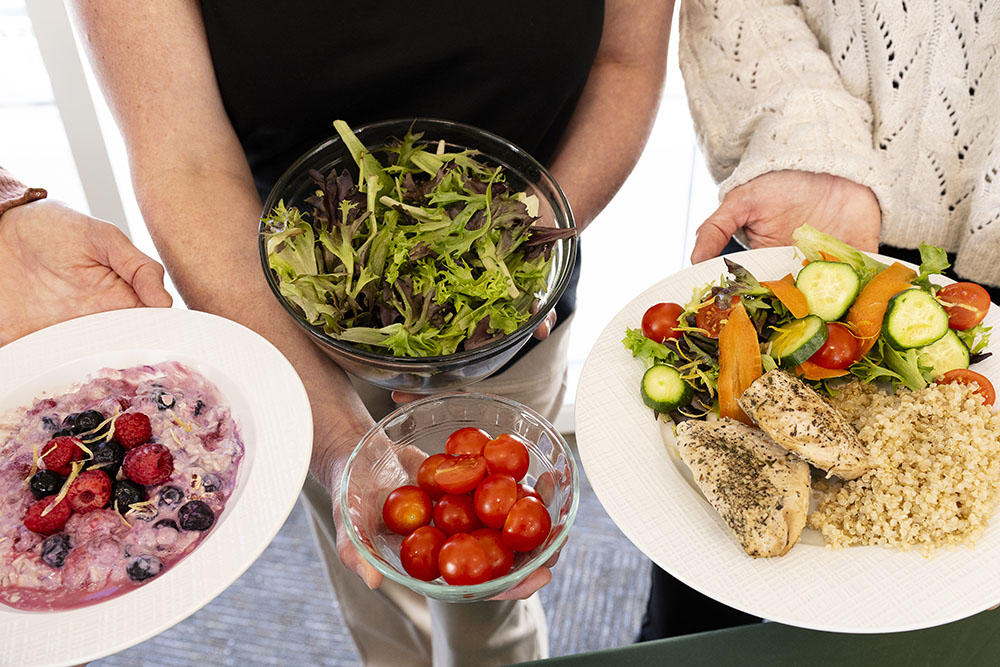
Within the framework of the MIND diet, two categories of produce stand out for their impact: leafy green vegetables and berries. From the Swiss chard and tender spinach found at local farmer’s markets to the first flush of summer strawberries and blueberries, June provides the perfect entry point for anyone looking to adopt a brain-healthy lifestyle.
Summer produce is often more nutrient-dense than out-of-season options because farmers harvest it at peak ripeness and it spends less time in transit. As a result, it delivers more antioxidants and flavonoids to support brain health.
Leafy Greens: A Foundational Ingredient for Cognition
Research suggests that consuming at least one serving of leafy green vegetables a day can help slow cognitive decline. Greens like arugula, kale, and spinach are rich in vitamin K, lutein, folate, Vitamin E, and dietary nitrates. These nutrients work in tandem to reduce inflammation and oxidative stress in the brain. In June, the variety is staggering. Beyond the standard spinach, look for mustard greens, collards, and Swiss chard. These can be tossed into fresh salads, blended into morning smoothies, or lightly sautéed with garlic and olive oil—another staple of the MIND protocol.
Berries: Nature’s Brain Boosters
While the MIND diet encourages all fruit, berries are specifically highlighted for their neuroprotective benefits. Berries such as blueberries, strawberries, and raspberries contain anthocyanins, which have been shown to improve signaling between brain cells and increase brain plasticity – the ability for the brain to reorganize its structure and functions throughout life in response to learning, experience, or injury. June marks the start of berry season in Northern Nevada, offering a sweet way to satisfy a dessert craving while simultaneously protecting your memory. Aim for at least two servings of berries a week to align with the MIND diet’s recommendations.
The Power of Veggie Variety:
Beyond the “superstars,” the MIND diet emphasizes other vegetables. These include asparagus, beets, carrots, peas, peppers, radishes, and summer squash that fill the June bins. They provide the fiber and micronutrients needed for a healthy gut-brain connection. When we eat seasonally, we naturally diversify our intake. This helps our brains receive a wide range of phytonutrients that supplements cannot replace.
Recipe: Summer Harvest Brain Bowl
Base: 2 cups cooked quinoa or brown rice
Greens: 3-4 cups baby spinach, or other green of choice
Veg: 1 cup halved cherry tomatoes, 1 cup sliced cucumber, or any veggie of choice
Healthy Fat: 1 avocado, sliced
Protein/Crunch: ½ cup toasted pumpkin seeds
Protein Addition: 1 cup chickpeas or 2 soft-boiled eggs
Dressing: a generous drizzle of lemon-tahini (recipe below)
Lemon-Tahini Dressing:
½ cup olive oil
Juice of 1 lemon
1 tsp Dijon mustard
1 Tbsp tahini (optional)
Salt and black pepper to taste
Nutrition Education and Counseling
In June and September of 2026, Carson Tahoe Health is offering heavily discounted pricing for any Nutrition Therapy visits that insurance does not cover. Since insurance is not billed in this case, a physician referral is not required. To schedule an appointment, call the Carson Tahoe Centralized Scheduling team at (775) 445-5500 and let them know you are self-referring for the Nutrition Promotion.
The 2026 out-of-pocket rates in the months of June and September are as follows:
- 60-minute MNT visit: self-pay due at time of visit $90.
- 30-minute MNT visit: self-pay due at time of visit $50.
For more information, visit the website carsontahoe.com/nutrition or email [email protected].

 Carson Tahoe Health